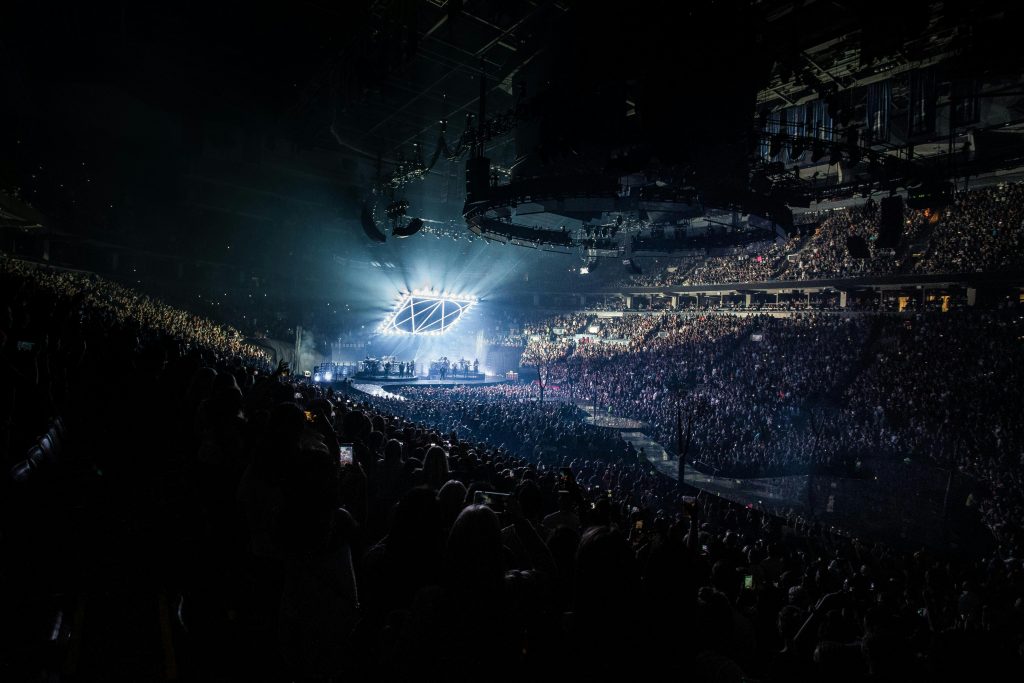
Live music is one of those things that somehow feels completely different depending on the room you’re standing in. A tiny packed venue with sticky floors and blown-out speakers creates a completely different kind of memory than an arena filled with thousands of screaming people and enough pyrotechnics to mildly concern the fire department.
And honestly? Both experiences are incredible for totally different reasons. Small venue shows and arena concerts each have their own culture, atmosphere, chaos, and emotional impact. Neither is objectively better — they just hit differently depending on what kind of experience you want.
So here’s the breakdown of small venue shows vs arena concerts and why music fans usually end up loving both.
Small Venue Shows: Sweaty, Loud, and Weirdly Personal
There’s something special about seeing a band in a venue small enough that you can actually make eye contact with them.
Small shows feel intimate in a way that arena concerts never can. You’re close enough to:
- see facial expressions,
- hear crowd interactions clearly,
- and experience the music in an almost physical way.
The bass shakes the walls. The room gets unbearably hot. Everyone screams the lyrics together like they’re collectively trying to emotionally survive something.
It feels raw.
Sometimes imperfect in the best possible way.
The Energy Feels More Personal
At smaller venues, artists often interact with the crowd more naturally. There’s less separation between performer and audience, which creates an entirely different atmosphere.
You notice:
- random jokes between songs,
- chaotic technical difficulties,
- spontaneous moments,
- and the crowd becoming part of the performance itself.
There’s also something uniquely cool about seeing a band before they become huge.
Nothing compares to hearing:
“I saw them in a tiny venue before they blew up.”
Concert bragging rights are real.
The Crowd Usually Feels More Passionate
People at small venue shows are often deeply invested in the music.
Nobody accidentally ends up at a tiny Tuesday-night alternative show with no air conditioning unless they genuinely care.
The crowd energy can feel more connected, emotional, and intense because everybody there actively chose to be part of it.
Especially in rock, punk, hardcore, indie, and local music scenes, smaller venues create a sense of community that’s hard to replicate elsewhere.
But Small Shows Also Come With Chaos
Of course, intimacy has its downsides.
Small venues often mean:
- limited parking,
- questionable bathrooms,
- terrible ventilation,
- overcrowding,
- and acoustics that occasionally sound like the speakers are fighting for their lives.
You may leave:
- drenched in sweat,
- partially deaf,
- emotionally overwhelmed,
- and smelling like the collective decisions of 200 strangers.
But honestly?
That’s part of the charm.
Arena Concerts: Spectacle, Production, and Pure Adrenaline
Arena concerts are a completely different type of magic.
Instead of intimacy, arena shows focus on scale.
Massive screens.
Pyrotechnics.
Light shows.
Confetti cannons.
Perfect production.
Tens of thousands of people screaming lyrics simultaneously.
It feels cinematic.
Some songs were practically designed for arenas — huge choruses, dramatic intros, giant crowd singalongs, synchronized phone lights swaying during emotional ballads.
Arena concerts turn music into an experience that feels larger than life.
The Production Is Unreal
This is where arena concerts dominate.
The visuals alone can be insane:
- fire effects,
- moving stages,
- elaborate lighting,
- giant LED walls,
- live camera work,
- and perfectly timed dramatic moments.
Arena tours feel immersive in a way smaller shows physically can’t achieve.
You’re not just hearing music.
You’re watching a full-scale performance production unfold in real time.
The Crowd Energy Feels Massive
There’s something emotionally overwhelming about hearing an entire arena scream the same lyrics back at an artist.
At smaller venues, the connection feels personal.
At arenas, the connection feels collective.
For a few hours, thousands of strangers become one giant emotional organism fueled by nostalgia, adrenaline, and overpriced drinks.
The energy can genuinely feel euphoric.
Especially during:
- iconic intros,
- final choruses,
- encore moments,
- or songs everyone grew up with.
But Arenas Can Feel Less Intimate
The downside is obvious:
sometimes you’re really far away.
Even with huge screens, there’s a difference between:
- seeing an artist from ten feet away,
- versus watching them from Section 214 while eating chicken tenders.
Arena shows can also feel more structured and polished, which occasionally removes some of the unpredictability that makes smaller shows feel special.
And depending on the venue, getting in and out can feel like surviving a minor evacuation event.
The Fashion Differences Are Real Too
Small venue crowds often lean:
- thrifted,
- edgy,
- band tees,
- leather jackets,
- practical shoes,
- and “I’ve been listening to this band since 2017” energy.
Arena concerts tend to feel more elevated and event-like.
People plan outfits more intentionally because arena tours often feel like major occasions rather than casual nights out.
Especially for legacy artists or big production tours, dressing up becomes part of the experience itself.
So Which One Is Better?
Honestly, neither.
Small venue shows give you:
- intimacy,
- rawness,
- unpredictability,
- and connection.
Arena concerts give you:
- spectacle,
- scale,
- production,
- and unforgettable crowd energy.
Some nights you want to stand ten feet from a band in a dark room with terrible ventilation and emotionally transformative guitar feedback.
Other nights you want fireworks, giant visuals, and an entire arena screaming every word around you.
The best music fans usually appreciate both experiences for different reasons.
Live music matters because of how it makes people feel, and both small venue shows and arena concerts create memories in completely different ways.
One feels like discovering something personal.
The other feels like participating in something massive.
But both create those rare moments where:
- the lights go down,
- the intro starts,
- the crowd erupts,
- and suddenly nothing else in your life exists for a while except the music.
And honestly, that feeling works in any size venue.