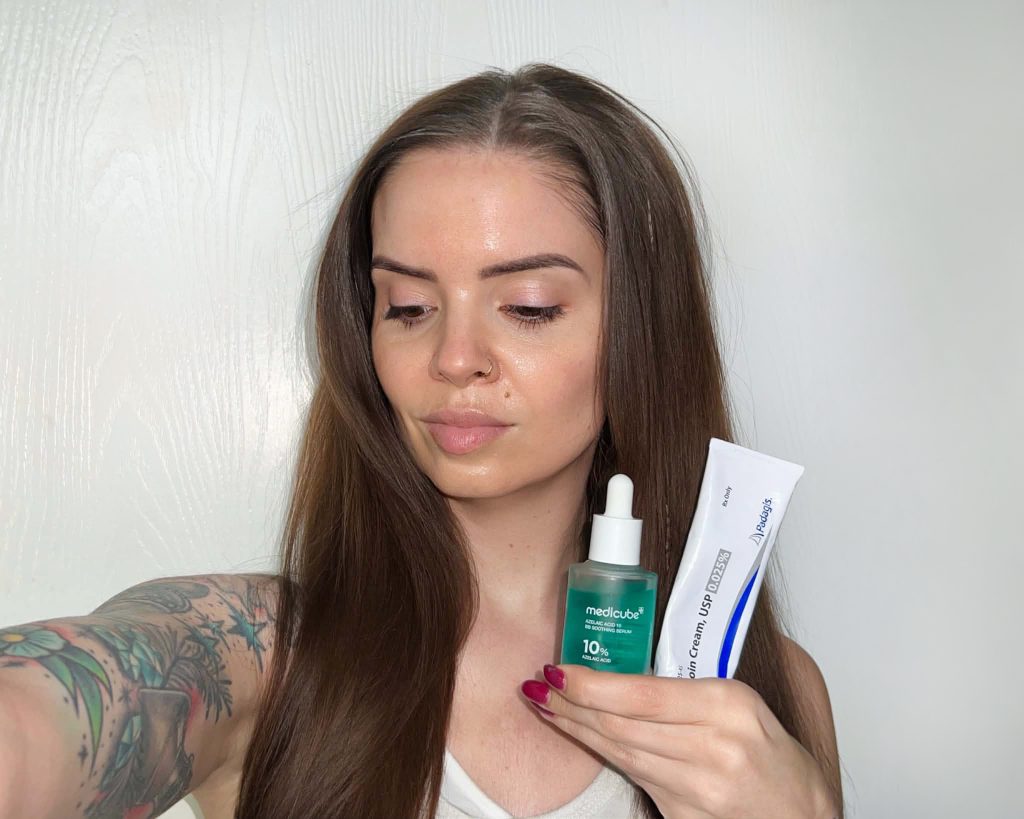
If you’ve spent any time researching effective skincare ingredients, you’ve probably come across tretinoin and azelaic acid. Individually, these ingredients have earned loyal followings for their ability to improve skin texture, reduce breakouts, and promote a healthier complexion. When used together properly, they can become a powerful duo that addresses multiple skin concerns at once.
What Is Tretinoin?
Tretinoin is a prescription-strength retinoid derived from vitamin A. It works by increasing cell turnover, helping your skin shed old cells and generate new ones more quickly. Because of this, tretinoin is often prescribed for acne, fine lines, sun damage, and uneven skin texture.
Many people consider tretinoin the gold standard in anti-aging skincare because it has decades of research supporting its effectiveness. With consistent use, it can help improve the appearance of wrinkles, boost collagen production, and create smoother, more radiant skin.
What Is Azelaic Acid?
Azelaic acid is a naturally occurring acid found in grains such as barley, wheat, and rye. In skincare, it is valued for its anti-inflammatory, antibacterial, and brightening properties.
Azelaic acid is commonly used to help manage:
- Acne and breakouts
- Redness and inflammation
- Rosacea symptoms
- Post-inflammatory hyperpigmentation
- Uneven skin tone
Unlike some stronger acids, azelaic acid is generally well tolerated by many skin types, including sensitive skin.
Why They Work So Well Together
One of the biggest reasons skincare enthusiasts and dermatologists often recommend combining tretinoin and azelaic acid is because they complement each other’s strengths.
1. Improved Acne Control
Tretinoin helps prevent clogged pores by increasing cell turnover, while azelaic acid fights acne-causing bacteria and reduces inflammation. Together, they target acne from multiple angles.
2. Fading Dark Spots Faster
Post-acne marks and hyperpigmentation can be frustrating to treat. Tretinoin helps accelerate skin renewal, while azelaic acid inhibits excess pigment production. This combination can help improve overall skin tone and reduce discoloration over time.
3. Reduced Redness and Irritation
While tretinoin can sometimes cause dryness and irritation, azelaic acid’s anti-inflammatory properties may help calm the skin. Many users find that incorporating azelaic acid into their routine helps balance some of the redness associated with retinoid use.
4. Enhanced Skin Texture
Tretinoin smooths rough texture and encourages collagen production, while azelaic acid helps refine skin tone and clarity. The result can be skin that looks brighter, smoother, and healthier overall.
How to Use Them Together
If you’re new to either ingredient, it’s often best to introduce them gradually.
A common approach is:
Morning
- Gentle cleanser
- Azelaic acid
- Moisturizer
- Broad-spectrum sunscreen SPF 30 or higher
Evening
- Gentle cleanser
- Moisturizer (optional)
- Tretinoin
- Moisturizer
Some people can tolerate using both products in the same evening routine, while others may prefer separating them to minimize irritation. The best approach depends on your skin type and sensitivity level.
Don’t Forget Sunscreen
Both skin renewal and pigment correction efforts can be undermined by sun exposure. Daily sunscreen is essential when using tretinoin and highly recommended when treating hyperpigmentation with azelaic acid.
Consistent sunscreen use not only protects your skin but also helps you achieve better long-term results.
Shop Azelaic Acid Products:

Final Thoughts
Tretinoin and azelaic acid are two of the most effective ingredients available for improving acne, uneven skin tone, texture concerns, and signs of aging. While each ingredient is impressive on its own, their complementary benefits make them a standout combination for many skincare routines.
As with any active ingredients, patience and consistency are key. Results often take several weeks or months to become noticeable, but many users find that the combination of tretinoin and azelaic acid helps them achieve clearer, brighter, and healthier-looking skin over time.
Disclaimer: Tretinoin is a prescription medication. Always consult a dermatologist or healthcare professional before starting a new skincare regimen, especially if you have sensitive skin or underlying skin conditions.